Artificial Turf Guide: Technical Engineering and Design Masterclass
The adoption of synthetic surfacing in residential and commercial architecture represents more than a mere shift in aesthetic preference; it is a fundamental re-engineering of the outdoor environment. Historically, the lawn was a biological monoculture, a high-input system requiring constant chemical, hydraulic, and manual intervention to maintain its peak state. It is not a static installation but a complex mechanical system that interacts with local climate, soil hydrology, and kinetic stress.
A rigorous artificial turf guide must move beyond the surface-level visual appeal of “evergreen” grass and confront the technical realities of polymer fatigue, thermal absorption, and drainage physics. For the architect or property owner, the challenge lies in navigating a market saturated with marketing jargon terms like “lifelike” and “maintenance-free” that obscure the critical engineering data.
This article serves as a technical and philosophical masterclass, exploring the layered complexities of synthetic turf systems. We will examine the material science of polyethylene and polypropylene extrusions, the geotechnical requirements of sub-base stabilization, and the governance frameworks required to ensure a twenty-year operational life.
Understanding “Artificial Turf Guide”

To treat an artificial turf guide as a simple product manual is to overlook the systemic nature of the installation. A synthetic lawn is an assembly of disparate parts: native soil, geotextile fabric, graded aggregate, the turf carpet itself, and the infill material. The “guide” must therefore be a study of how these layers interact over time. A common error is the decoupling of the turf specification from the site’s hydrological profile.
One of the primary oversimplification risks involves “Face Weight.” However, weight without architecture is a liability. A heavy turf with flat, unstructured blades will mat and flatten more quickly than a lighter-weight turf that utilizes engineered fiber shapes like “W,” “C,” or “V.” This guide prioritizes “Pile Memory” and “Polymer Density” over simple mass, as these are the true indicators of longevity in a high-traffic environment.
Furthermore, the multi-perspective view of synthetic turf includes its role as a thermal regulator. In arid climates, the “best” turf is not the one that looks most like Kentucky Bluegrass, but the one that incorporates IR-reflective pigments and cooling infills. Understanding these nuances requires a departure from the “green carpet” mindset and an embrace of a high-performance textile engineering mindset.
Deep Contextual Background: The Evolution of Resilience
The trajectory of synthetic turf began in the 1960s as a purely industrial solution for indoor sports venues. These early “first-generation” systems were essentially nylon carpets glued to concrete, offering zero permeability and significant friction hazards. The “second generation” introduced in the 1970s and 80s added longer fibers and sand infill, providing a modicum of “give” but still lacking the aesthetic and tactile properties of natural grass.
The “third generation,” which dominates the market today, introduced polyethylene fibers and a tan-colored “thatch” layer to mimic the dead organic matter found in real lawns. We are now entering a “fourth generation” characterized by specialization. We no longer have “general-purpose” turf; instead, we have hyper-specific systems for pet relief, rooftop heat mitigation, professional athletics, and high-traffic commercial zones. The modern history of the industry is a race toward “Geotechnical Integration,” where the turf is no longer seen as a covering, but as the final permeable layer of a site’s stormwater management plan.
Conceptual Frameworks and Mental Models

-
The Reservoir Model: View the aggregate base beneath the turf not just as a foundation, but as a temporary storage tank for rainwater. The “Void Ratio” (the space between the stones) determines the system’s capacity to prevent surface runoff during peak rain events.
-
The Lever-Arm Principle: This model explains pile matting. A 2.5-inch grass blade acts as a longer lever than a 1.5-inch blade. Under the same foot pressure, the longer blade experiences more torque at its base, making it more prone to “falling over” unless it has a high-density thatch layer to prop it up.
-
The Thermal Battery Analogy: Synthetic turf stores thermal energy. The darker the pigment and the denser the infill, the more heat it retains. Designers must plan for “Heat Shedding” through irrigation or specialized materials, much like cooling a high-performance engine.
Key Categories and Material Variations
| Category | Primary Material | Fiber Shape | Best Use Case | Constraint |
| High-Traffic Commercial | Polyethylene / Nylon | W-Shape / Ribbed | Plazas, Entryways | Harsher tactile feel |
| Luxury Residential | Polyethylene | C-Shape / Soft | Showpiece lawns | Prone to matting if walked on daily |
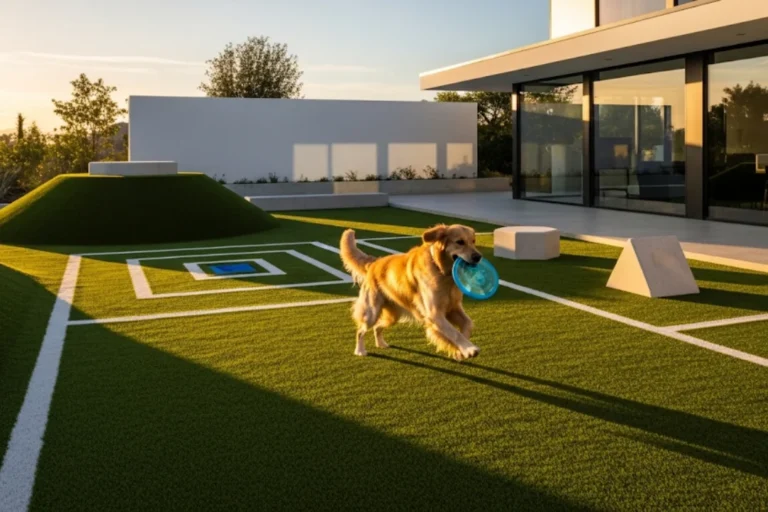
| Pet-Specific Systems | PE with Woven Backing | U-Shape | Dog runs, Vet clinics | Requires daily/weekly flushing |
| Heat-Mitigation Turf | IR-Reflective PE | S-Shape | Desert climates | Higher upfront material cost |
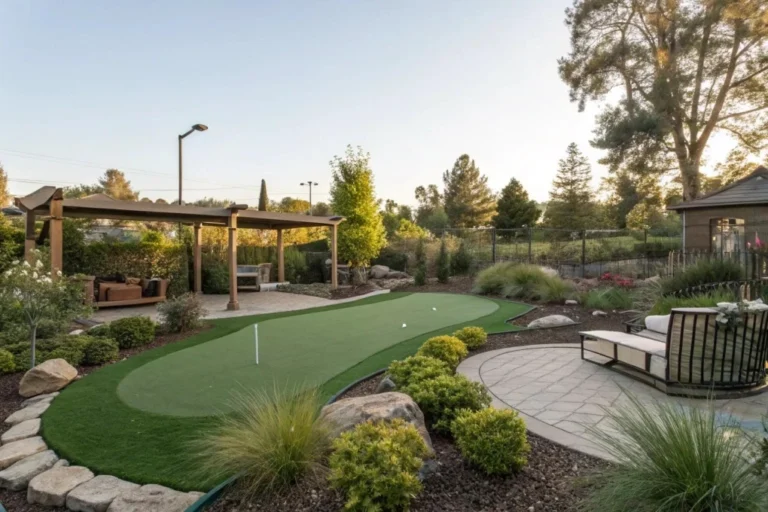
| Shorter Pile Play | Polypropylene | Textured / Crimped | Putting greens, Gyms | Lacks natural aesthetic |
Realistic Decision Logic
The selection process should follow a hierarchy of constraints:
-
Hydrology: Does the site require lateral or vertical drainage?
-
Kinetic Load: Will the traffic be human (pivot-heavy) or canine (corrosive)?
-
Thermal Exposure: Is the site in a “Low-E” window reflection zone?
-
Aesthetic Tolerance: Is the goal “perfect green” or “realistic variation”?
Detailed Real-World Scenarios
Scenario A: The Rooftop Amenity
Constraints: Weight limits, zero soil infiltration, high wind uplift.
The Strategy: Use a 1-inch “Drainage Tile” system beneath a short-pile turf. The tile acts as a structural bridge, allowing water to flow to rooftop drains while distributing the weight of furniture and people.
Failure Mode: Installing turf directly on a roof membrane. This traps moisture, leads to mold, and can void the building’s roof warranty.
Scenario B: The Shaded Suburban Slope
Constraints: Heavy runoff from the uphill neighbor, zero natural light (moss risk).
The Strategy: A “Tiered Base” of 4 inches of crushed stone over a non-woven geotextile. The turf must be “anchored” with 8-inch timber spikes along the top edge to prevent the entire system from sliding during a saturation event.
Planning, Cost, and Resource Dynamics
The economics of synthetic turf are front-loaded. While natural grass has low installation costs and high maintenance costs, turf is the inverse.
| Budget Component | Cost Range (Installed / Sq. Ft.) | Strategic Importance |
| Sub-Base Aggregate | $2.00 – $4.00 | Foundational stability and drainage |
| Turf Material | $2.50 – $6.00 | UV resistance and pile memory |
| Labor (Professional) | $4.00 – $10.00 | Seam integrity and grading accuracy |
| Infill (Specialized) | $0.50 – $1.50 | Odor control and cooling |
Opportunity Cost: Choosing a 10-year turf over a 20-year turf saves 15% upfront but results in a 100% replacement cost twice as often, including the cost of landfill disposal for the old material.
Tools, Strategies, and Support Systems
-
Laser Leveling: Essential for creating a 1-2% “fall” to move water away from structures.
-
Power Brooms: The primary tool for “blooming” the turf and maintaining the infill’s distribution.
-
Seaming Tape and Adhesive: Modern polyurethane adhesives provide a chemical bond that is superior to mechanical staples in freeze-thaw cycles.
-
Infill Injectors: Ensure that sand or cooling minerals are placed at the base of the thatch, not just dusted on top.
-
Enzymatic Cleaners: Non-toxic solutions that break down uric acid in pet-focused systems.
-
Membrane Separators: Preventing the “migration” of the stone base into the native sub-soil.
Risk Landscape and Failure Modes
The primary “Invisible Killer” of synthetic turf is Window Reflection. Modern Low-E windows can focus sunlight into a “death ray” that exceeds 220°F, instantly melting polyethylene fibers.
Structural Failure (Sub-Base Settlement): If the aggregate base is not compacted in 2-inch lifts to 95% density, “birdbaths” (depressions) will form. These trap water, collect silt, and create a breeding ground for biological growth, negating the “low maintenance” promise.
Governance, Maintenance, and Long-Term Adaptation
A successful synthetic lawn requires a Review Cycle:
-
Quarterly: High-traffic zones should be power-brushed to prevent fiber “laying.”
-
Annually: Infill levels should be checked. UV rays degrade the backing; infill is the “sunscreen” that protects it.
-
Post-Storm: Inspect perimeter drains for debris blockage.
Maintenance Checklist
-
[ ] Fiber Health: Check for “matting” (fibers flat).
-
[ ] Seam Integrity: Inspect for “curling” or gaps.
-
[ ] Odor Profile: Identify areas of pet waste accumulation.
-
[ ] Infill Depth: Ensure 3/4″ to 1″ of fiber is exposed (not buried).
Measurement, Tracking, and Evaluation
Performance can be quantified through three signals:
-
Infiltration Rate: Does 1 gallon of water disappear in under 10 seconds?
-
Fiber Memory: After a heavy chair is moved, do the fibers return to vertical within 24 hours?
-
Color Fastness: Comparing a “protected” sample (under a pot) to the exposed lawn to measure UV fading over 5-year intervals.
Common Misconceptions
-
Myth: “Turf is maintenance-free.”
-
Correction: It is low-maintenance. It still requires cleaning, brushing, and infill top-offs.
-
-
Myth: “Turf is dangerous for pets.”
-
Correction: Only if you use lead-based pigments (now banned) or fail to flush the urine out of the system.
-
-
Myth: “It’s all made in the same factory.”
-
Correction: There are significant differences in the polymer “purity” and the UV stabilization chemicals used by American vs. overseas manufacturers.
-
Synthesis and Judgment
The decision to install synthetic turf is a decision to embrace engineering over biology. The longevity of the installation depends less on the brand of the grass and more on the integrity of the sub-surface preparation and the consistency of the maintenance governance.
As technology advances, we may see more “Carbon-Neutral” polymers and bio-based infills, but the physics of drainage and kinetic wear will remain constant. A sophisticated approach to synthetic turf views the backyard as a high-performance machine, one that requires an initial investment in engineering to yield a decade of effortless utility.